
Last updated November 24, 2026
 Sweep & inspection
 Caps & crowns
 Flue relining
 Masonry repair
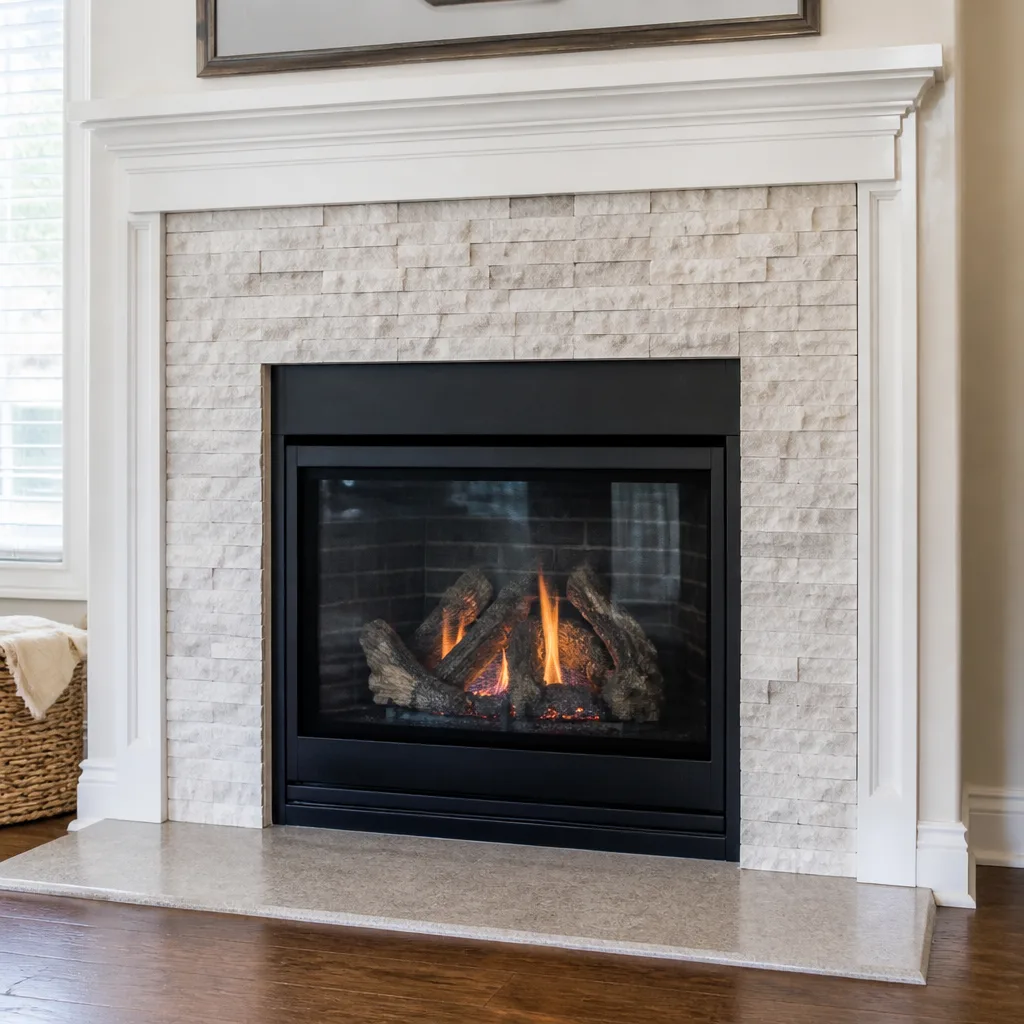 Gas fireplace service
Level 1 sweep and inspection to the NFPA 211 annual standard - flue, crown, cap, and flashing checked and photographed
Chimney sweep logs do not sweep chimneys. They loosen some creosote - which then falls where a brush and vacuum still have to collect it.
Chimney Cleaning Warning Signs: A Syracuse Homeowner’s Reference Guide
A white stain on your chimney’s exterior isn’t aesthetic damage. It’s efflorescence, and it means water is moving through your masonry from the inside out. Most homeowners wipe it off, assume it’s harmless mineral dust, and forget it. Months later they’re looking at a failed liner or rusted flashing, wondering where it came from. The dramatic chimney problems get the attention – a fire makes noise and smell and smoke. The quiet mechanical signals that show up months before failure are the ones that actually matter. This guide catalogs those signals for Syracuse homeowners, with descriptions precise enough that you’ll know exactly what you’re looking at from the ground, from the firebox, and from the sound your fireplace makes when it’s cold.
Quick Answer
The warning signs that most reliably predict chimney trouble are efflorescence (white staining), spalling brick, receding mortar joints, a cracked crown or cap, smoke smell when the fireplace is cold, dampers that resist movement, and any Stage 2 or Stage 3 creosote odor. Any one of these means you should schedule an inspection soon. A rumbling sound, a smell of hot metal, or visible smoke escaping into the room means don’t light another fire until a chimney professional has looked at it.
Styles & brands we work with
- Sweep & inspection
- Caps & crowns
- Flue relining
- Masonry repair
- Gas fireplace service
Table of Contents
- What exterior warning signs mean for your chimney’s structure
- Interior indicators: draft, smell, and damper resistance
- Reading creosote: what Stage 1, 2, and 3 smell like
- Sounds and smells that tell you something specific
- How to self-inspect the firebox and smoke shelf from the ground
- The triage framework: schedule soon vs. don’t light another fire
- Why Syracuse chimneys show these signs faster
- When to call a professional
What Exterior Warning Signs Mean for Your Chimney’s Structure
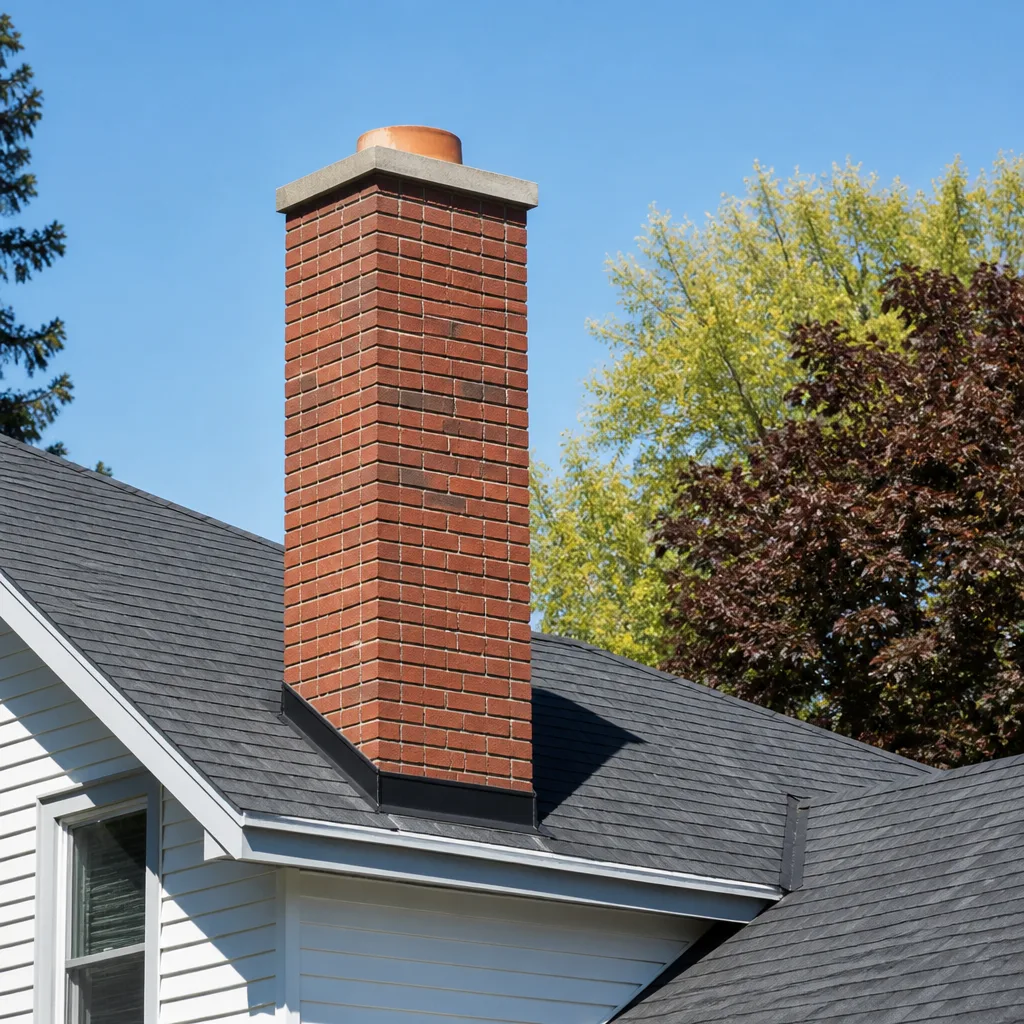
You can read most of a chimney’s condition from the ground. Stand back far enough to see the whole stack and look at four things: the masonry surface, the mortar joints, the crown, and the cap. Each one tells a different part of the story.
Efflorescence is the white, powdery, salt-like staining that appears on brick and mortar. It’s water-soluble salts carried to the surface by moisture moving through the masonry. That moisture has to be coming from somewhere – usually a failed crown, a deteriorated cap, or breached flashing at the roof line. If you see efflorescence that reappears after you brush it away, water is actively entering the chimney structure. Left alone, that same moisture freezes during Syracuse winters, expands inside the brick, and begins the next problem on this list.
Spalling brick is brick that has cracked, flaked, or lost its face. You’ll see rough, pitted surfaces or brick fragments on the roof or in the gutter below the chimney. Spalling is the direct result of freeze-thaw cycling around trapped moisture. Once a brick face is gone, that brick can’t protect the interior of the wall behind it, and the damage accelerates.
Mortar recession happens when the mortar joints between bricks have worn back, leaving the bricks sitting proud of the wall. Run your eye down the joints: if the mortar is deeply recessed, water has been working on it, and the joints need to be repointed before the stack loses structural integrity.
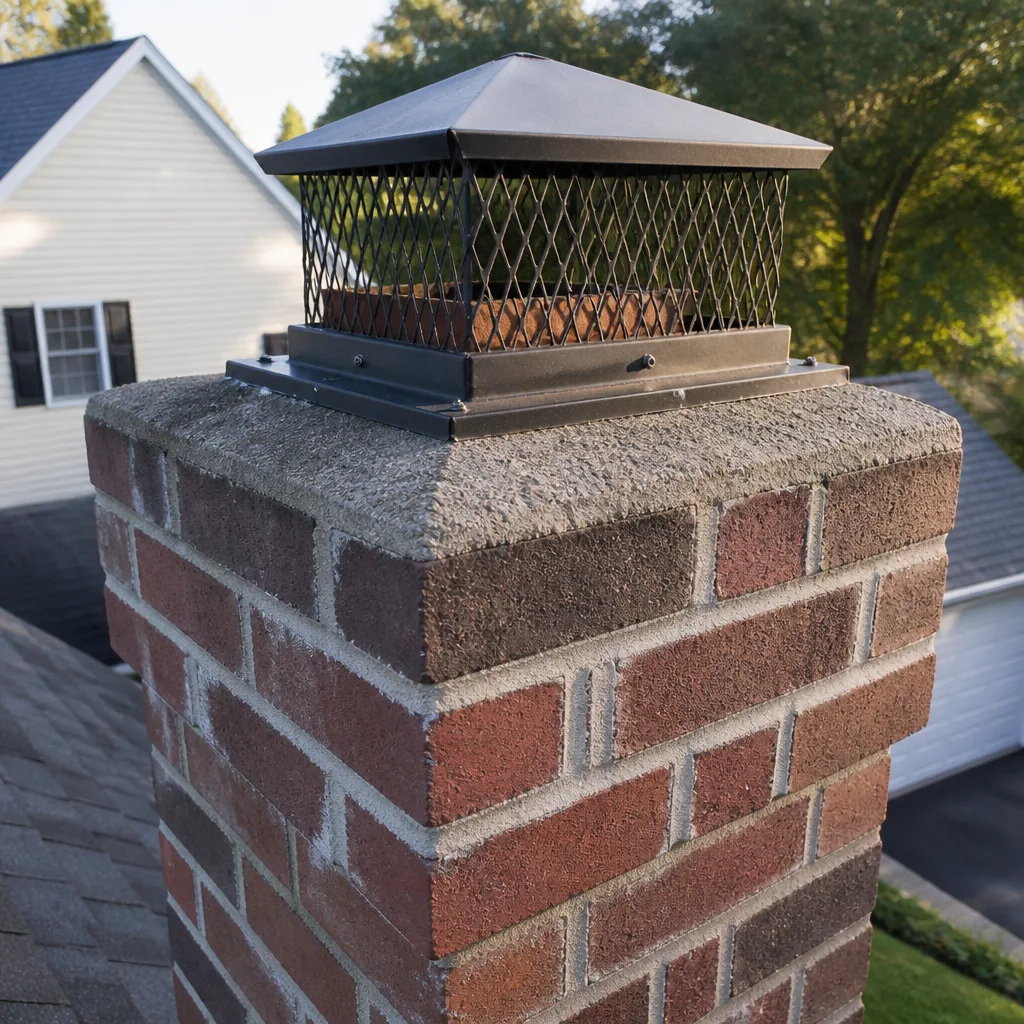
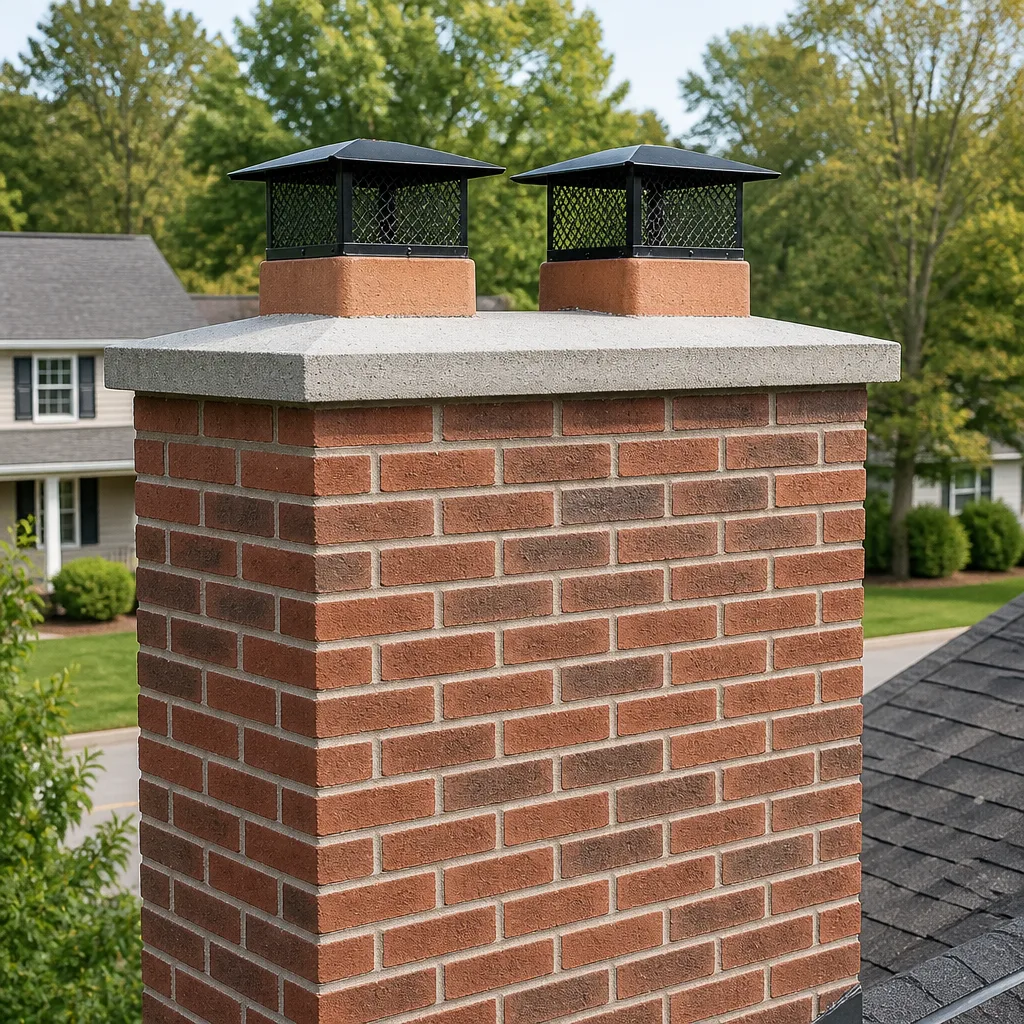
Crown and cap cracks are the most common sources of the water intrusion that starts everything else. The crown is the concrete or masonry sloped surface at the very top of the chimney; the cap is the covering over the flue. A crack in the crown lets water run straight down into the masonry. A missing or damaged cap lets rain and animals straight into the flue.
None of these require climbing on the roof to notice. The American Lung Association and the Chimney Safety Institute of America both advise homeowners to leave roof access to trained chimney professionals, so the ground-level read is exactly what you’re meant to do. In Syracuse, where the stack sees repeated freeze-thaw cycles across the winter, catching these signs early is what separates a repointing job from a rebuild.
Interior Indicators: Draft, Smell, and Damper Resistance
The inside of your fireplace tells you just as much as the outside, and each symptom points to a specific mechanical problem.
Draft reversal is when smoke or cold air pushes down into the room instead of up the flue. You’ll notice it when you first light a fire, especially after the fireplace has been cold for a while. The causes fall into a short list:
- A flue that’s cold and heavier than the room air, so it needs priming before it will draw
- A blocked or partially blocked flue – soot, creosote, or a bird’s nest from a missing cap
- A flue that’s undersized for the firebox opening
- Negative pressure in the house from exhaust fans or a tightly sealed modern home
- A smoke shelf that’s clogged with debris, breaking up the airflow the fire relies on
Smoke smell when the fireplace is cold is one of the most specific signs a homeowner can notice. If you walk past your cold fireplace and smell smoke, something is holding smoke in the flue and pushing it back into the room. Often that’s a clogged smoke shelf or a blocked flue. In Syracuse, where many homes have closed up tight for winter, the effect is more pronounced.
Damper resistance – a damper that’s hard to open, sticks, or doesn’t fully close – usually means rust, corrosion, or warped metal from moisture in the firebox. A damper that won’t close all the way leaks warm air up the flue all winter and lets cold air down when the fire is out. A damper that won’t fully open starves the fire and pushes smoke into the room.
If any of these are a routine annoyance rather than an occasional occurrence, that’s the point where you should book a chimney professional to look at it. Problems with the firebox, damper, and smoke shelf usually fall under fireplace repair, and they’re worth fixing before they cascade into a chimney-level problem.
Reading Creosote: What Stage 1, 2, and 3 Smell Like
Creosote is the tar-like residue that forms when wood smoke condenses on the inside of the flue. It builds up in three recognizable stages, each with its own characteristics and its own odor profile.
Stage 1 creosote is light, flaky, and sooty. It brushes off easily and smells like a cold campfire – a faint smoky wood odor. This is normal and is what a routine annual sweep removes.
Stage 2 creosote is a thicker, often glazed or shiny layer of hardened soot and tar. It doesn’t brush off with a standard sweep; it needs specialized tools to remove. The smell is sharper and more acrid than Stage 1, and can be noticed in the room even when the fireplace is cold. Stage 2 buildup is where you start to be at meaningful risk of a chimney fire if you keep burning.
Stage 3 creosote is a dense, hardened, tar-like coating – sometimes called glaze creosote – that has baked onto the flue walls. It’s difficult to remove and often requires chemical treatment or, in severe cases, relining. The smell of Stage 3 is heavy and sweet-tar, and can be faintly present in the house even in summer. Some homeowners describe it as smelling like roofing tar or hot asphalt that isn’t there.
Here’s where a homeowner’s honest assessment matters: if you can’t see the flue interior yourself, you’re guessing. That’s what a professional camera inspection is for. A chimney professional runs a camera down the flue and shows you what’s actually there, stage by stage. With chimney repair, the same camera and documentation still applies – the point is that you see what we see.
One more creosote fact worth knowing: buildup happens fastest with wet or unseasoned wood, cool flue temperatures, and slow, smoldering fires. In Syracuse, homeowners who burn wood that was split and stacked in spring but not fully seasoned by fall build creosote faster than they realize.
Sounds and Smells That Tell You Something Specific
Some chimney warning signs come through the senses more than the eyes. Get to know these:
- Rumbling or roaring from the flue during a fire. That’s a chimney fire. It’s not a crackle or a whoosh – it’s a freight-train rumble, sometimes accompanied by vibration in the masonry or a black, greasy smoke outside. Call your fire department first, then a chimney professional. Don’t light another fire until the flue has been inspected.
- Hot metal or burning rubber smell. This usually means heat is reaching metal components – a damper, firebox grate, or top-sealing damper assembly – that shouldn’t be that hot. Stop burning and have it looked at.
- Sweet chemical smell in the room. This can indicate a leaking gas fireplace or gas line. If you have a gas appliance, treat a sweet smell as a potential leak and ventilate the room. Call your gas utility before doing anything else. If it turns out to be a chimney cap or flue issue, that’s where we come in.
- Damp, musty smell from the firebox. That’s a symptom of water entry – usually a failed crown, flashing, or cap – not just a stale chimney. Water in the firebox is an early warning of masonry failure.
- Sharp, acrid smell when you open the damper. Typically Stage 2 creosote or a partially blocked flue. Schedule a sweep before the next burn.
A few of these are “schedule soon.” A few are “don’t light another fire.” The triage section below sorts them out. Either way, this is the part of chimney ownership where our technicians’ training (up to 10 years of experience) matters – what you’re trying to sort out from a smell is something they’ve learned to identify from a hundred variations.
How to Self-Inspect the Firebox and Smoke Shelf From the Ground
You don’t need to climb on a roof to learn a lot about the inside of your chimney. A bright flashlight and your phone camera get you a surprisingly complete look at the firebox, the damper, and the smoke shelf. Here’s how to do it safely:
- Make sure the fire is fully out. Wait until the firebox is cold to the touch. Don’t do this the night of a fire.
- Open the damper fully. It needs to be wide open or the smoke shelf isn’t accessible.
- Get low and aim a bright flashlight up into the firebox. Look at the fire brick, the damper plate, the smoke shelf above the damper, and the flue opening. Take a photo with your phone camera – you’ll see detail in a photo you miss live.
- Look for these at the firebox: cracked or missing fire brick, white staining or rust on the damper frame, a heavy black or glossy coating on the smoke shelf, or a nest of leaves and debris sitting on the shelf.
- Look up into the flue opening – with your phone camera on video and a light on. You won’t see the whole flue, but you can see the first few feet. Glossy black coating is Stage 2 or higher creosote. Rough texture or missing clay is a liner warning.
- Look at the top of the firebox and the smoke shelf for daylight or water tracks. A visible drip line or daylight where there shouldn’t be any is a structural warning sign.
- Photograph and save. You’ll want to compare against what a professional camera shows you, and you’ll want the documentation if you ever sell the home.
What this basic check cannot see: the upper flue, the liner joints, the crown, the cap, and the flashing at the roofline. That’s why the self-inspection is a triage tool, not a substitute for a professional sweep – it tells you how urgently to book, not whether to book. If your photos are clean but you still smell smoke on a cold day, schedule the sweep anyway.
The Triage Framework: Schedule Soon vs. Don’t Light Another Fire
Not every warning sign is an emergency. Some are “call this week.” A few are “stop using the fireplace now.” The trick is being honest with yourself about which column a sign falls into.
Schedule soon – call and book the next available sweep with an inspection:
- Efflorescence that reappears after brushing, or any white staining on the masonry
- A single spalling brick or mild mortar recession
- A cracked crown on close inspection
- A missing or loose cap
- A cold-fireplace smoke smell that isn’t constant
- Stage 1 or light Stage 2 creosote visible in the firebox
- Burning wood that isn’t fully seasoned
- A damper that’s harder to move than it used to be
Don’t light another fire until a chimney professional has inspected it:
- Anything that sounds like the description in the “sounds and smells” section above (rumbling, roaring, hot-metal smell)
- Visible smoke coming into the room when the fire is burning
- Stage 3 glaze creosote visible anywhere you can see
- Any sign of water actively running inside the firebox or down the flue
- A sweet smell, which you should treat as a possible gas issue until proven otherwise
- A flue that’s visibly blocked, or evidence of a bird or animal in the flue
- A cracked or missing fire brick in the firebox itself
When in doubt, treat it as “don’t light another fire.” The cost of waiting is small compared to the risk.
If the inspection finds the liner is deteriorated, you’ll hear about chimney sweep and liner inspection terminology. You’ll also hear about restoring before replacing, which is where the HeatShield system comes in. HeatShield resurfacing can restore a deteriorated clay liner without a full replacement in the right conditions. It’s not right for every liner, but when it’s appropriate it extends liner life, and it’s a much smarter conversation than replacing a liner that has good bones.
Why Syracuse Chimneys Show These Signs Faster
Syracuse is a freeze-thaw town. Across a given winter, our chimneys go through dozens of cycles of moisture entering the masonry, freezing, expanding, thawing, and re-wetting. Every cycle widens hairline cracks a little more. That’s why efflorescence and spalling brick show up here faster than in a mild climate, and why a crown crack that would be cosmetic elsewhere is a real structural concern on a Syracuse stack.
The other local factor is how our homes heat. Many Syracuse homes have wood-burning fireplaces in regular use through the cold months, and many have gas fireplaces that see less frequent use. A gas appliance needs its own venting; wood appliances need dry wood and a warm flue. Either way, the chimney needs a sweep and inspection annually. Our experience across Syracuse neighborhoods is that the homeowners who catch problems earliest are the ones who do that annual check even when nothing feels wrong.
Cap, crown, and flashing – the three water entry points
If you see efflorescence, spalling brick, or dampness in the firebox, one of three things is usually feeding water in:
- The cap. A missing, bent, or rusted-through chimney cap lets rain and animals straight into the flue. A properly fitted cap – we install Copperfield and Olympia Chimney caps – keeps water out and keeps wildlife out.
- The crown. The masonry or concrete top of the chimney. A hairline crack ruins its job. Rebuilding or resurfacing the crown closes the water path.
- Flashing at the roof line. The metal or membrane seal where the chimney meets the roof. Failed flashing shows up as a stain on the ceiling, not just on the chimney.
Each of these is a repair a chimney specialist can handle directly. There’s no reason to bring in a roofer, a mason, and a handyman when one professional can address the whole top of the stack.
Liner signs you should never ignore
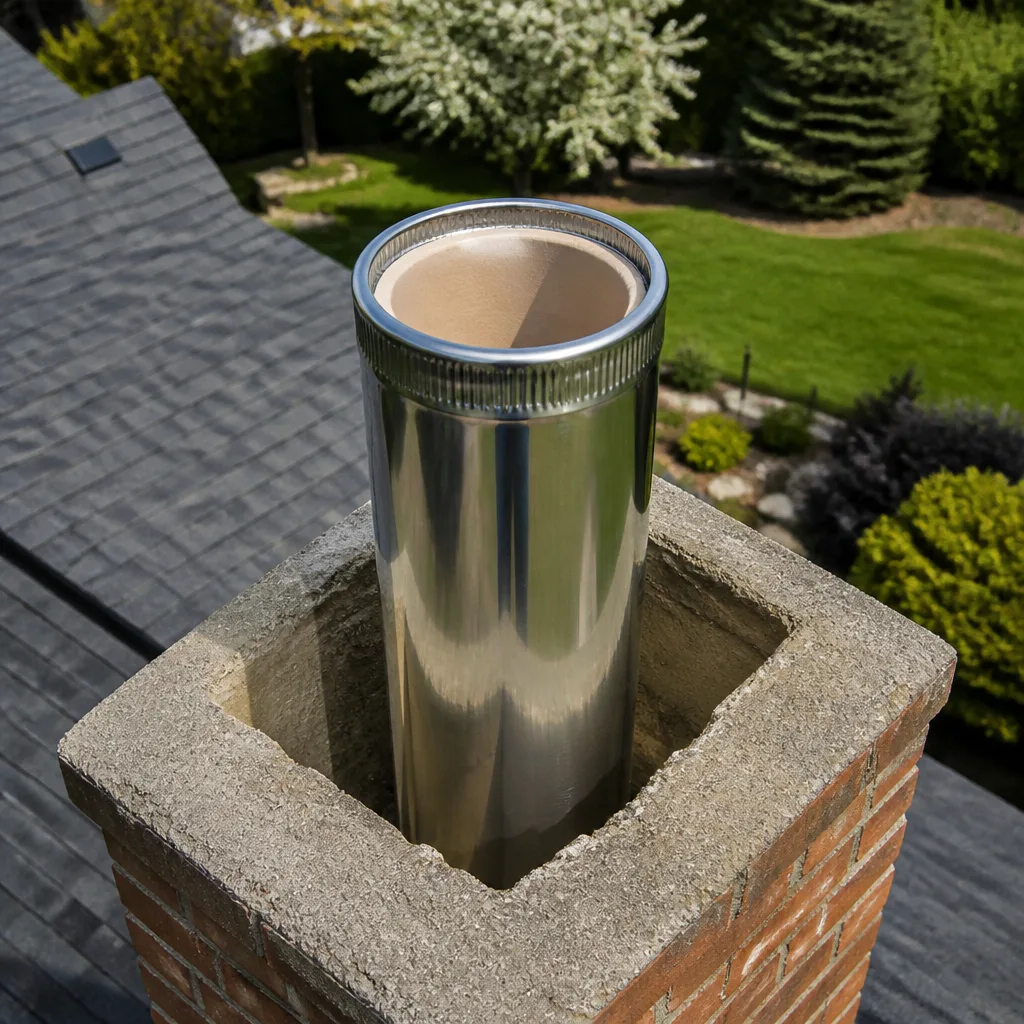
Your flue liner separates the products of combustion from the surrounding house structure. When it fails, exhaust gases can enter the home. Signs that the liner is compromised include:
- Visible cracks, chips, or missing sections of clay tile at the flue opening
- Rough or flaking material on the inside of the flue
- White or grey residue at the base of the flue
- Any sign that the liner is offset or has separated at a joint
- Carbon monoxide alarms going off in the house (call your gas utility and your fire department immediately)
When a liner is damaged, the conversation isn’t just “replace it.” Flexible systems like DuraFlex allow us to reline a flue with offsets and transitions that a rigid system can’t fit. That means a home with a tricky, older flue can still get a safe, appropriately sized lining without major structural surgery.
Damper, firebox, and smoke shelf – the inside story
We see the same three issues repeatedly on Syracuse fireplace inspections:
- A damaged damper plate that doesn’t seal – lets heat up and cold down, and makes the fire hard to control.
- Cracked or missing fire brick – a sign the firebox has been overheated or the mortar has failed. Fire brick protects the structure behind it, so this is a repair-before-burning issue.
- A clogged smoke shelf – debris, soot, or a bird nest sits on the shelf and disrupts the airflow the fire needs. It’s often the hidden cause of smoke backing into the room.
These are the same symptoms that get quoted as fireplace repair; getting them resolved is generally straightforward, and it extends the life of the firebox itself.
Common Mistakes to Avoid
- Wiping off efflorescence and calling it cosmetic. The stain isn’t the problem – the moisture behind it is. Clean it, then find out why it came back. In Syracuse, it comes back because the crown, cap, or flashing is failing.
- Assuming a “clean” firebox means a clean chimney. Soot-free fire brick and a clogged smoke shelf can coexist. The flue is what carries smoke; the firebox is just the entry point.
- Burning green or unseasoned wood “because it’s cold out.” Wet wood burns cool and builds creosote fast. What you save on wood cost you’ll spend on a sweep – or worse, a reline.
- Waiting until the next cold snap to schedule. Chimney sweeps fill up in Syracuse when the first real cold hits. The early-fall sweep catches problems when there’s time to fix them, not the week you need the fireplace.
- Treating a gas fireplace as “no chimney needed.” A gas fireplace still vents through a chimney and still needs inspection. A blocked or degrading gas flue is not a small concern.
- Replacing a liner before checking if restoration is viable. HeatShield resurfacing can restore a deteriorating clay liner without a full replacement in the right conditions. Get a restoration evaluation before assuming replacement.
- Hiring whoever answers the phone when the sign on the door says “chimney sweep” but the truck says “handyman.” Chimney work is a specialized trade, from the sweep through the crown rebuild. A generalist who tries to do it all is more likely to miss a structural sign than a dedicated chimney specialist.
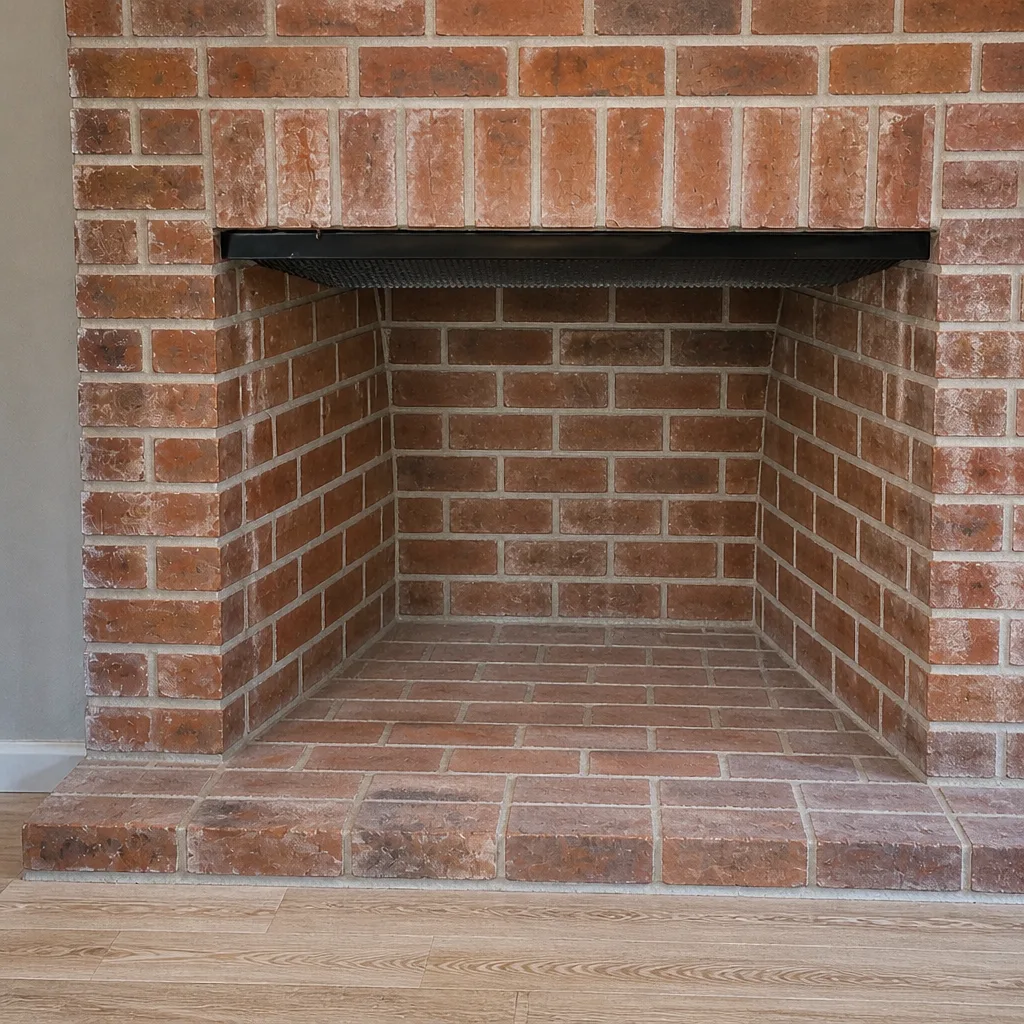
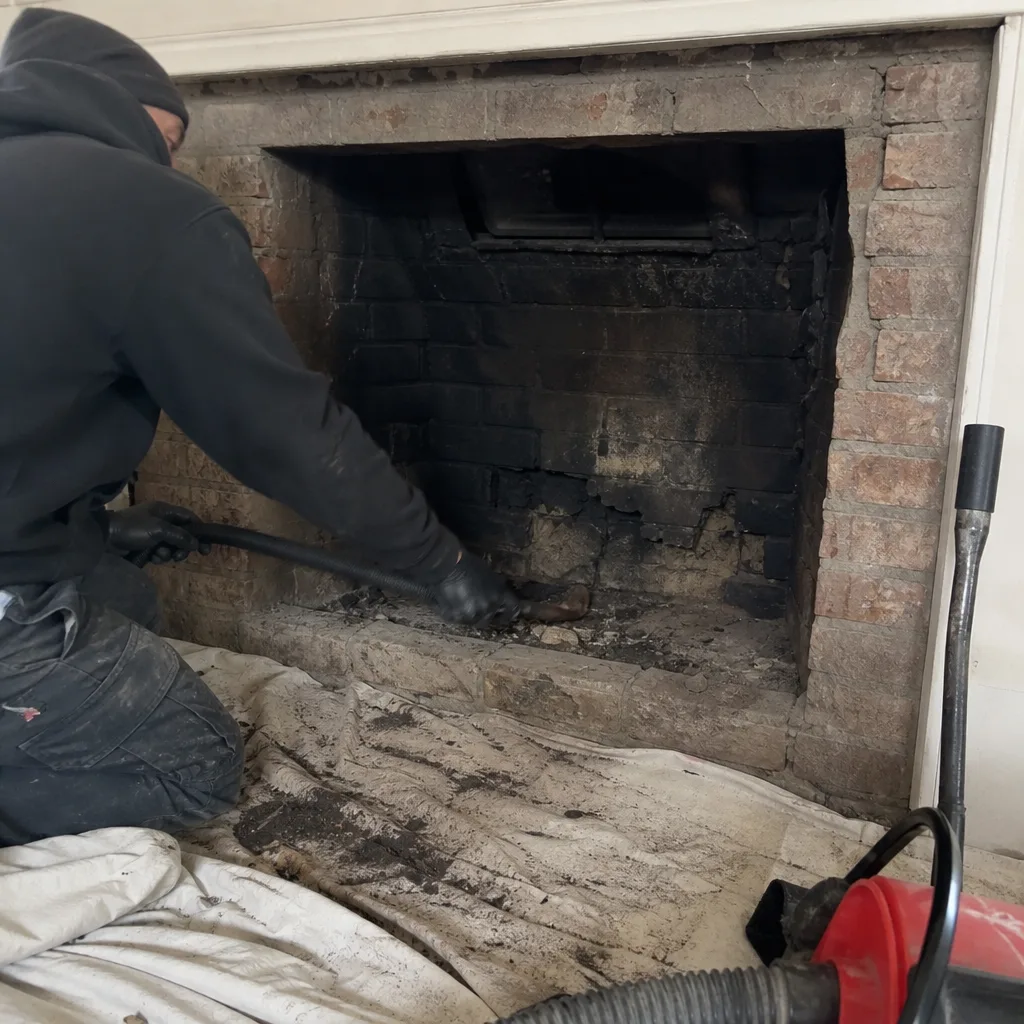
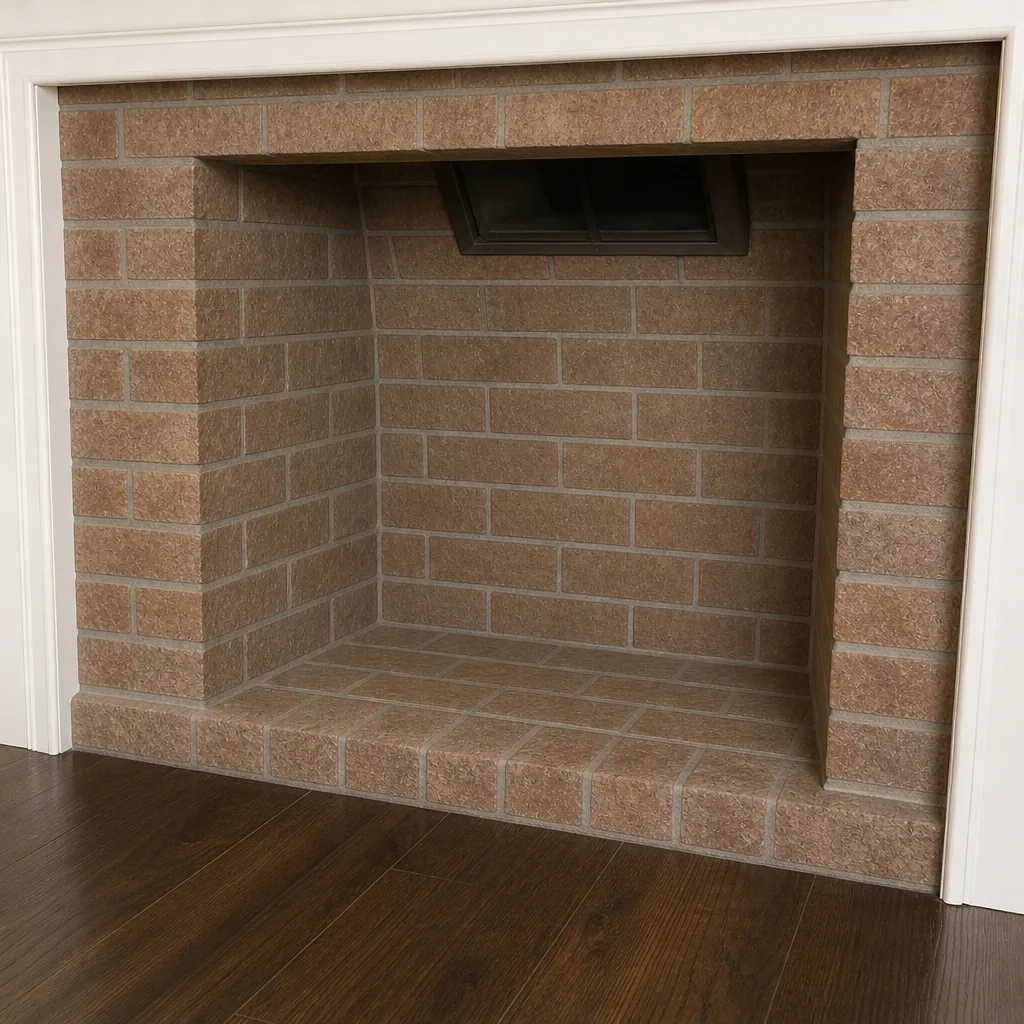
See the difference
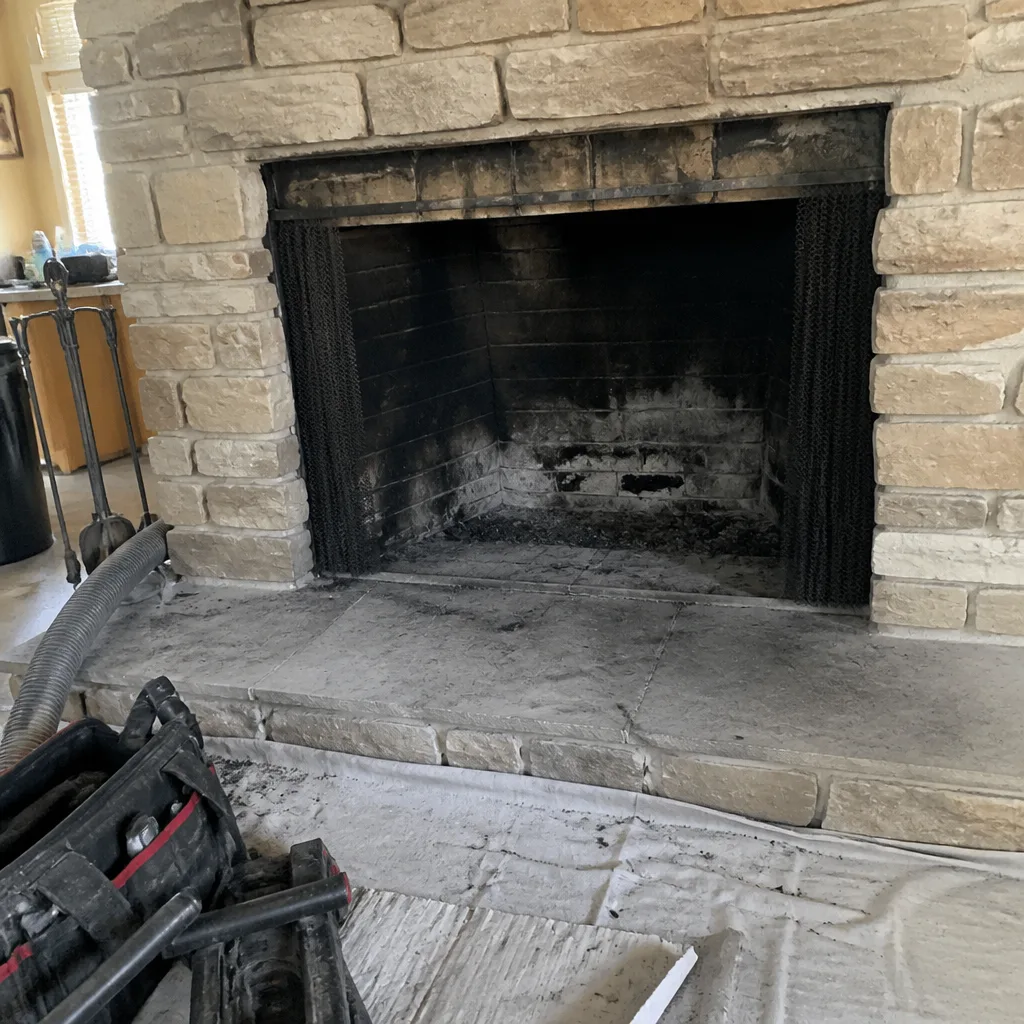 Before
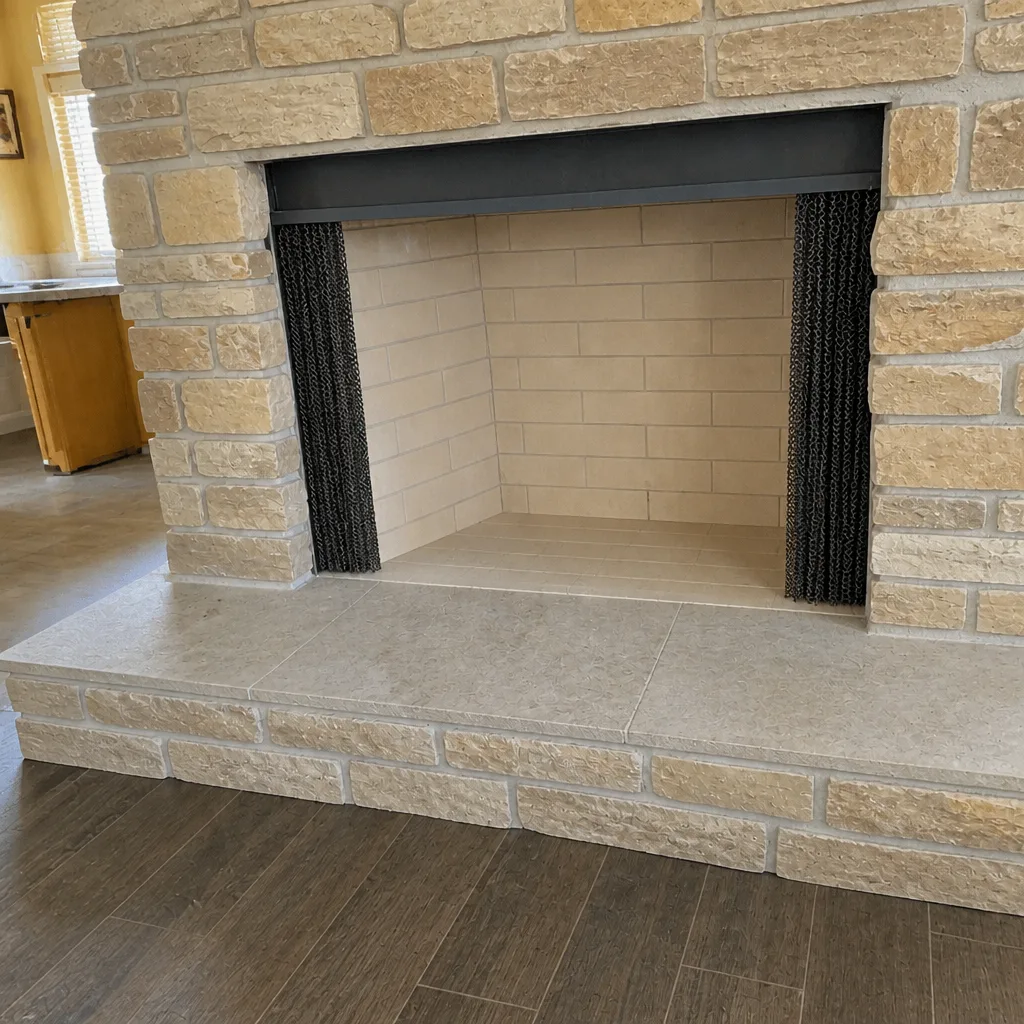 After
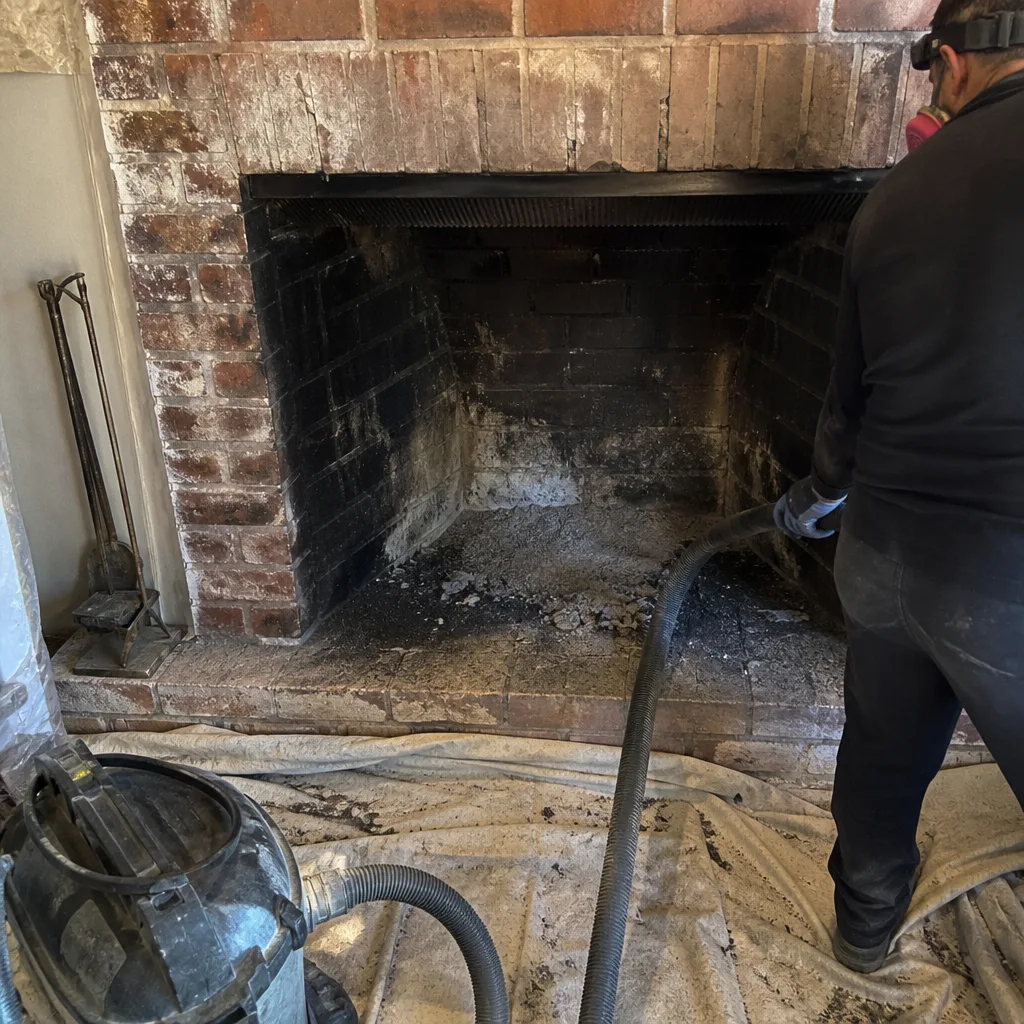 Before
 After
 Before
 After
When to Call a Professional
Call a chimney professional in Syracuse when you see any of the “schedule soon” signs in the triage section, when you notice any of the “don’t light another fire” signs, or when it’s simply been a year since the last sweep or inspection – even if nothing feels wrong. If you’ve recently noticed smoke backing into the room, a cold-fireplace smoke smell, a rumbling sound during a fire, or a hot-metal smell, stop using the fireplace and call today. If you have a failed inspection report from a previous sweep and aren’t sure what the fix should look like, a second evaluation is worth the time. Syracuse Chimney Sweep offers free estimates in Syracuse – call (877) 820-8528. We answer 24/7. Fast dispatch from 7am to 7pm, Sunday through Friday.
Frequently Asked Questions
A Syracuse chimney should be swept at least once a year, and more often if you burn wood regularly through the winter or if your wood isn’t fully seasoned. The National Fire Protection Association recommends an annual chimney inspection, and in Syracuse’s freeze-thaw climate that annual check is also the best way to catch exterior masonry signs before they become repairs. If you smell smoke on a cold day or see white staining on the stack, book an inspection sooner than the annual cycle. Call (877) 820-8528 for an exact quote on a sweep – estimates are free.
White staining, or efflorescence, means water is moving through the masonry and carrying salts to the surface. It’s almost never just a cosmetic issue. The source is usually a cracked crown, a failing cap, or deteriorated flashing at the roof line. If it reappears after brushing, water is actively moving through the chimney and it needs a professional look before the next freeze. Call (877) 820-8528 to schedule an inspection.
Chimney sweeping cost in Syracuse depends on the job – a routine annual sweep with an inspection is one price range, while a sweep that includes camera documentation and a liner evaluation is another. Every job is priced per estimate, and the written estimate sets the price. Call (877) 820-8528 for a free estimate.
Not every failing liner needs full replacement. HeatShield liner resurfacing can restore deteriorated clay liners in the right conditions, extending the liner’s life without building a whole new flue. The only way to know which applies to your chimney is a camera inspection that shows you the actual condition of the flue. We show homeowners what we find and walk them through the options – nothing gets recommended that you can’t see for yourself. Call (877) 820-8528 for a free estimate.
Skipping the annual sweep lets creosote build up, and it’s creosote buildup that fuels a chimney fire. It also means you don’t catch water intrusion signs early, so what would have been a crown repair turns into repointing or a partial rebuild. The safety risk is the real reason to sweep; the cost-of-repair angle is the secondary one. There’s no good reason to skip it. Call (877) 820-8528 for an exact quote – estimates are free.
A chimney fire sounds like a low, sustained rumble or roar – a freight-train sound from the flue, sometimes with vibrations in the chimney itself. If you hear it, call your fire department first, get everyone out, and don’t use the fireplace again until a chimney professional inspects the flue. A chimney professional can determine whether the flue is safe to reuse or needs repair or relining. Call (877) 820-8528 once the fire department has cleared you to schedule the evaluation.
The Bottom Line
The signs that protect your home aren’t the dramatic ones. They’re the white efflorescence reappearing on the chimney face, the cold-fireplace smoke smell, the damper that no longer moves freely, the sweet tar smell that suggests Stage 3 creosote, the rumble from the flue that says stop lighting fires. If you take one habit from this guide, take this: walk around your chimney once a month from the ground, take a photo up into the firebox with your phone and a flashlight, and book a sweep when anything changes. In Syracuse, the freeze-thaw winters make the annual inspection the single highest-value hour you spend on your home’s safety. From the firebox to the cap, we handle every stage of your chimney’s life: sweep, fireplace repair, chimney repair, cap and crown, liner, and rebuild. Nothing gets recommended without camera evidence you can see. And when the written estimate is done, that’s the final price – no surprises.
If you’re looking at any of these warning signs right now, call Syracuse Chimney Sweep at (877) 820-8528 for a free estimate. We answer 24/7. Fast dispatch from 7am to 7pm, Sunday through Friday. Our technicians have up to 10 years of experience, and every inspection gives you a photo report of what’s actually inside your chimney.
Written by the team at Syracuse Chimney Sweep.